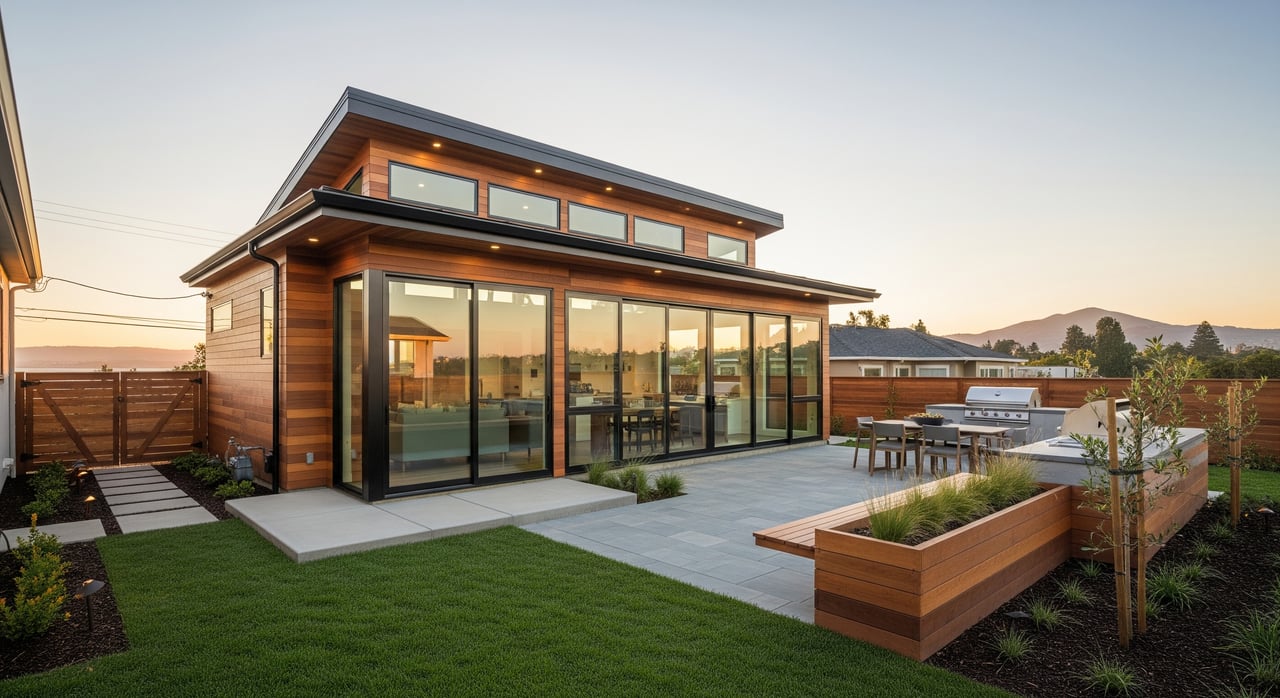
Thinking about adding an ADU to your Fremont property but not sure how to pay for it? You are not alone. Many Bay Area homeowners want the extra space or rental income an ADU can provide, yet feel stuck deciding between a refi, HELOC, renovation loan, or construction financing. This guide breaks down the best ADU financing paths for Fremont, how local permitting and timelines affect your choice, and what to expect from lenders so you can move forward with confidence. Let’s dive in.
Fremont ADU basics that affect financing
Fremont follows California’s ADU laws, which require ministerial (non-discretionary) review for many ADUs and set faster review timelines once your application is complete. In practice, plan check cycles, contractor scheduling, and inspections can stretch the total timeline beyond the formal review window, so build in extra time.
Expect the city’s Planning and Building divisions to provide checklists, submittal requirements, and possibly pre-approved plan resources for common ADU types. If pre-approved plans are available, they can reduce design costs and shorten plan review, which influences how long you need construction financing.
Permit, utility connection, and impact fees add to your total project cost. Some cities reduce or defer certain ADU fees, so you should confirm current fee schedules and any local incentives with Fremont before locking your budget. These fees affect your loan amount and whether you lean toward a single-close loan or a flexible line of credit.
Bay Area construction costs are among the highest in the country. Labor, seismic and fire code compliance, and site work in Alameda County can push per-square-foot pricing higher than inland markets. Costs also vary by ADU type and finish level, which is why local contractor bids are essential before you finalize financing.
Your ADU financing options explained
Cash-out refinance
A cash-out refi replaces your existing mortgage with a larger one, and you take the difference in cash to fund the ADU. It can offer long-term fixed financing and a single payment. If you already have a very low mortgage rate, replacing it could increase your overall interest cost, so weigh the tradeoffs carefully.
HELOC and home equity loan
A HELOC is a revolving line of credit secured by your home, while a home equity loan is a fixed-rate second mortgage with a lump sum. HELOCs are useful for staged work or when the final cost is uncertain. Home equity loans work well for a clear, defined budget but usually carry higher rates than a primary mortgage.
Renovation loans
Programs like FHA 203(k) and Fannie Mae HomeStyle combine a purchase or refinance with renovation funds based on the after-improved value. Lenders escrow the construction funds and release them in draws during the build. This is a good option when you want one loan that covers both your mortgage and the ADU construction.
Construction or construction-to-permanent loans
Construction loans fund ground-up builds and major projects. They are often interest-only during construction, then convert to a permanent loan or require a separate refinance at completion. Lenders will expect detailed plans, a fixed-price contract, and a draw schedule tied to inspections.
Investor or DSCR loans
Investor-focused loans look at rental income and property cash flow rather than your personal income. They can finance ADUs for investment properties if projected rents cover debt service. Terms and availability vary, and rates are often higher than conforming loans.
Personal or contractor financing
Unsecured personal loans or builder-offered financing may work for small scopes or when you do not want to use your home as collateral. These usually come with higher rates and shorter terms, so they are best suited for limited projects.
Quick comparison
| Financing path | Best for | Rate/term profile | Pros | Cons |
|---|---|---|---|---|
| Cash-out refinance | Owners with strong equity seeking one fixed payment | 15 to 30 year fixed or ARM, often near primary mortgage rates | Single payment, long amortization, potentially lower long-term rate | Replaces existing mortgage, closing costs, may raise your rate |
| HELOC | Staged or uncertain costs | Variable rate, interest-only draw then amortize | Flexible draws, borrow only what you need, lower upfront costs | Variable rate risk, second lien |
| Home equity loan | Defined budgets with fixed payments | Fixed rate and term, typically higher than first mortgage | Predictable payments, faster to close than refi | Second lien, shorter terms than 30-year mortgage |
| Renovation loans | One loan for mortgage plus ADU | Mortgage-like rates, funds escrowed | Single-close convenience, uses after-improved value | More paperwork, contractor and plan requirements |
| Construction to perm | Ground-up detached ADUs, larger projects | Higher construction rate, converts to permanent loan | Designed for build phase, structured draws | Stricter underwriting, potentially two-step process |
| Investor/DSCR | Income properties and investors | Based on rental income, higher rates | Underwritten on cash flow, non-owner options | Higher rates, tighter reserves and LTVs |
How to choose in Fremont
- Equity available. If you have strong equity, a cash-out refi can provide long-term fixed financing. With limited equity, a HELOC or a renovation loan that uses after-improved value may be more realistic.
- Existing mortgage rate. If your current rate is very low, think twice before replacing it. A second-position HELOC or home equity loan might preserve your first mortgage.
- Project size and certainty. Garage conversions or small attached ADUs with defined budgets fit well with home equity loans. Large, detached builds often align with construction-to-perm or a renovation loan.
- Permit timeline and fees. Fremont’s ministerial review is faster than discretionary review, but design cycles, revisions, and utility coordination can stretch your schedule. A HELOC can cover early design and permits, then you can refinance to permanent financing when the build begins.
- Need for a single-close solution. If you want one mortgage that includes construction funds, consider FHA 203(k) or HomeStyle. Lenders will require plans, bids, and oversight of draws.
- Owner-occupant or investor. Owner-occupants can access FHA or conforming options. Investors often rely on DSCR or portfolio products tied to rental income.
Budgeting your ADU in the Bay Area
Set realistic expectations based on local conditions. In the Bay Area, smaller garage conversions can be at the lower end of the cost spectrum and may land in the lower tens of thousands to the low six figures depending on scope and existing structure. Attached or small detached ADUs typically fall in the mid tens to high hundreds of thousands of dollars. Fully detached ADUs with new foundations, utility runs, and higher-end finishes often range from about 200,000 to 400,000 or more.
Use at least two or three local contractor bids to fine-tune your budget. Include a contingency of 10 to 20 percent to cover unknown conditions, especially for older structures, grading, or utility surprises. Align your budget with permitting fees, utility connection costs, and any school or park fees that may apply.
Step-by-step financing game plan
- Clarify your goal. Decide whether the ADU is for family use, long-term rental, or both. This guides your budget, finishes, and financing.
- Confirm local requirements. Contact Fremont’s Planning and Building divisions for the current ADU checklist, fee schedule, and average permit timeline. Ask about any pre-approved plan options.
- Scope your project. Work with a designer or contractor to define size, layout, and systems. Get detailed line-item bids and schedules.
- Compare financing paths. Request quotes for a cash-out refi, HELOC, renovation loan, and construction-to-perm. Ask for estimated closing costs, payment scenarios, and loan-to-value limits.
- Get pre-approved. A pre-approval clarifies your borrowing capacity and any documentation needed before construction starts.
- Prepare your documents. Gather plans, permits or permit timeline, contractor license and insurance, fixed-price contract, and a draw schedule.
- Align financing with your timeline. If design and permits will take months, consider a HELOC for early costs, then secure long-term financing before construction begins.
- Monitor during construction. Track draws against milestones, keep a contingency buffer, and update your lender on progress and inspections.
Lender document checklist
- Completed loan application and credit report.
- Income verification, such as W-2s, tax returns for two years, pay stubs, or rental income documentation.
- Current mortgage statement if refinancing or adding a second lien.
- Proof of homeowners insurance and any HOA documents if applicable.
- Detailed plans and scope of work, such as architectural drawings or a pre-approved plan.
- Contractor contract with fixed price, license number, and insurance.
- Line-item cost estimate or bid.
- Permit applications or issued permits, depending on lender requirements.
- Appraisal that considers the after-improved value for renovation loans and many refis.
- For construction loans, a construction timeline, draw schedule, contingency budget, and lien release process.
Risk and timeline tips
- Build a buffer. Set aside a 10 to 20 percent contingency to cover site surprises or code upgrades.
- Protect your low-rate mortgage. If you have a very low first mortgage rate, compare the lifetime cost of a cash-out refi to a second-position HELOC or home equity loan.
- Plan for inspections and draws. Lenders release funds in stages. Make sure your contractor understands the draw process and inspection checkpoints.
- Model conservative rents. If you plan to rent the ADU, use conservative rent comps and factor in vacancy. This helps you understand cash flow under realistic conditions.
Recommended next steps
- Contact the City of Fremont Planning and Building teams for the latest ADU checklist, fees, and permit timelines, and to ask about any pre-approved plan options or fee deferrals.
- Gather at least two contractor bids that include detailed scope, materials, schedule, and a fixed price when possible.
- Compare loan quotes from your bank, a local credit union, and lenders that regularly fund renovation or construction loans. Request LTV limits, closing costs, and payment examples.
- Build a conservative rental pro forma if you plan to rent the ADU, including vacancy and operating expenses.
- Speak with a tax professional about how construction costs, depreciation, and rental income may affect your taxes.
Adding an ADU in Fremont can unlock living flexibility and potential rental income. With the right financing plan and a realistic timeline, you can move from permit to move-in with fewer surprises. If you want a local perspective on which financing path fits your goals and how ADUs perform in the East Bay and South Bay, connect with Rajiv Kohli for a consult.
FAQs
What is the fastest way to finance an ADU in Fremont?
- HELOCs and home equity loans often close faster than construction loans, but speed depends on your documentation, equity, and lender capacity.
How long do Fremont ADU permits take once submitted?
- Under California’s ministerial rules, reviews of complete ADU applications are designed to move quickly, often within weeks to a couple of months, but design cycles and revisions can extend the total timeline.
Which ADU financing usually has the lowest long-term cost?
- A cash-out refinance often provides the lowest long-term rate, though replacing a very low existing mortgage can increase overall interest cost.
Can investors finance an ADU without owner occupancy?
- Yes, investor or DSCR loans focus on rental income and property cash flow rather than owner occupancy, though rates and terms vary by lender.
How much should I budget for ADU cost overruns?
- A contingency of 10 to 20 percent is a common buffer to cover unknown site issues, code upgrades, or material changes.
Will an ADU in Fremont increase my home’s value enough to justify a loan?
- ADUs typically add value, but the amount depends on location, unit quality, and rental potential, so use local comps and conservative income assumptions when modeling returns.